
Key Trends in Medicine: AI Powered Healthcare Innovations
By Thulasy Suppiah, Managing Partner of Suppiah & Partners
Introduction
A shortage of 11 million healthcare workers is expected by 2030, the World Economic Forum reports, but it is hopeful that advances made by artificial intelligence (AI) in healthcare will help bridge that gap. With its ability to ease tasks, summarise large data sets, reduce time and achieve higher accuracy than humans, it is indeed a wonder that adoption of AI by the healthcare sector remained for a long time “below average”. However, as AI gets smarter, and learns better, more and more spaces in healthcare are bowing to automation. Here are some areas in healthcare that are benefitting from the latest AI and digital learning (DL) applications.
Precision Diagnosis
For strokes caused by a blood clot, time is of essence. Doctors would want to know the initial onset time to determine the right treatment.
Researchers from Imperial College London, the University of Edinburgh, and Technical University of Munich have enhanced stroke timing estimation using AI. They trained the algorithm they developed on a dataset of 800 brain scans with known stroke times, allowing the model to independently identify affected regions in CT scans and estimate stroke timing.
The team then tested the algorithm on data from almost 2,000 other patients. The software proved to be twice as accurate as using a standard visual method. The algorithm also excelled in estimating the “biological age” of brain damage, indicating how much the damage has progressed and its potential reversibility.
The research study leader, Dr. Paul Bentley from Imperial College London said, the accuracy of this data will help doctors make emergency decisions to administer the best response in stroke patients.

Higher Accuracy
Healthcare powered by data and smart automation is also helping to reduce misdiagnosis.
Among the most common mistakes made at accident and emergency (A&E) units in the UK, are that as many as 10 per cent of fracture cases are either overlooked or diagnosed late by medical professionals.
This could lead to further injury or harm to the patient, worsening their condition, delaying treatment, and making it harder for hospitals to quickly treat and turnover patients.
The National Health Service (NHS) in the UK has now been given the green light by the National Institute for Health and Care Excellence (Nice) to use AI as a way of improving fracture detection when examining X-rays.
Clinical evidence suggests that using AI may improve detection in scans, compared with a medical professional reviewing on their own, “without increasing the risk of incorrect diagnoses”, Nice reportedly told The Guardian.
Nice says the technology is safe, reliable and could reduce the need for follow-up appointments.


AI-powered Assistance
Imagine if you could avoid long wait hours in crowded rooms just to have your healthcare questions answered by a doctor. How helpful would it be to minimise the number of times you had to pay for ever increasing clinical consultation costs?
AI virtual assistants are the saviour both overworked clinicians and hospital staff as well as anxious patients have been waiting for. They are AI-powered apps that chat with patients, clinicians, and staff by voice or text.
Digital assistants speed up triage, answer patient questions, schedule appointments, and automate repetitive tasks – traditionally tasks that required many hands and great effort. It can even help explain lab results. This frees staff to focus on care, cuts down wait time, and checks costs.
Virtual assistants can present as chatboxes on hospital websites, voice hubs at nursing stations, or prompts on tablets in waiting rooms. In an AI powered chatbox, a patient with an inflamed toe might type in their symptoms, and the assistant flags any danger signs (like a high fever) before suggesting home care or a quick clinic visit. On the admin side, digital assistants sort schedules, handle billing questions, and coordinate referrals.
That the global AI virtual assistant market in healthcare reached USD677.93 million (RM 2,869 million) in 2023 and is estimated to hit USD9295.63 million (RM39339.11 million) by 2030, is testament to its need and demand.
Machine Learning Applications
For many chronic diseases, by the time they present symptoms and the individual goes to the doctor because of an ailment or visible observations, it is often too late.
A new AI machine learning (ML) model can detect the presence of certain diseases before the patient is even aware of any symptoms, according to its maker AstraZeneca.
Using medical data from 500,000 people who are part of a UK health data repository, the machine could predict with high confidence a disease diagnosis many years later.
Slavé Petrovski, who led the research, told Sky News: “We can pick up signatures in an individual that are highly predictive of developing diseases like Alzheimer’s, chronic obstructive pulmonary disease, kidney disease and many others,” he said.
Another example where machine learning has made great strides is a technology developed by IBM Watson Health and Medtronic to continually analyse how an individual’s glucose level responds to their food intake, insulin dosages, daily routines, and other factors, such as information provided by the app user.
For example, are certain foods worsening the patient’s glucose control? Are there particular days or times where a person’s glucose goes high or low? The Sugar.IQ diabetes management application (App) leverages AI and analytic technologies to help people with diabetes uncover patterns that affect their glucose levels. This allows them to make small adjustments throughout the day to help stay on track.
Sugar. IQ provides information that show how lifestyle choices, medications, and multiple daily injections impact diabetes management and the time spent with glucose in the target range. It provides individualised guidance in understanding and managing daily diabetes management decisions, so that people on multiple daily insulin injections have more freedom to enjoy life.

Idiopathic Pulmonary Fibrosis (IPF) is a severe, chronic lung disease that progressively impairs lung function. It affects approximately five million people worldwide with a median survival of only three to four years. Available treatments can only slow its progression, and are unable to halt or reverse the disease.
AI significantly accelerated the drug discovery process for IPF and reduced the timeline from target identification to preclinical candidate selection to just 18 months – a major advancement in the efficiency of pharmaceutical research.
Insilico Medicine used AI-driven algorithms to design Rentosertib to treat IPF. It is the first AI-designed drug – where both the biological target and the therapeutic compound were discovered using generative AI.
Insilico Medicine is now engaging with global regulatory authorities to proceed with further trials aimed to evaluate Rentosertib’s efficacy and expedite its path to regulatory approval. If successful, Rentosertib could become the first AI-discovered therapy to reach patients, potentially transforming the treatment landscape for IPF.
AI is transforming drug discovery, delivery and administration. AI-designed drugs show 80-90 percent success rates in Phase I trials compared to 40-65 percent for traditional drugs. AI based tools such as ML and DL reduce development timelines from more than 10 years to potentially 3-6 years and cut costs by up to 70 percent through better compound selection.

Assisting in Surgical and clinical procedures
It may be too soon to speak of robots performing all the procedures in a surgery, but in operating theatres, AI and robotics are already assisting surgeons to handle surgical instruments, enhance precision, reduce invasiveness, and improve patient recovery.
The emergence of deep neural networks associated with modern computational power has produced reliable automation of certain tasks in medical imaging, including time-consuming and tedious workflows such as organ segmentation. Segmentation produces measurements and automatic extraction of quantitative features, which cannot be performed in everyday clinical practice.
In aortic and vascular surgery clinics, for instance, challenges existed during routine clinical follow-up for abdominal aortic aneurysms (AAAs). Longitudinal comparison of diameter measurements across consecutive tomography angiography (CTA) exams was cumbersome. It required the recall of multiple prior exams from the picture archiving and communication system of the hospital, measuring them, and comparing measures.
Augmented radiology for vascular aneurysm (ARVA) was designed to include automatic fetching of prior CTAs for separate analysis and automatic longitudinal comparison of each aortic segment. The use of cloud-based computing services enables processing of the multiple CTA data sets and the secure return of the report back to the hospital network within minutes. In the hospital, these reports are then automatically identified and placed into the patient’s hospital file or in any review workstation. This saves substantial time in everyday aortic clinic processes.

Early detection of epidemics and its spread
AI and ML technologies can also forecast the onset of certain epidemics and track their global distribution using historical data that is available online, satellite data, current social media posts, and other sources. ProMED-mail, a reporting tool that operates online and keeps track of epidemic reports from around the world, will likely be the best example of a monitor to help check an epidemic before it causes significant harm.

Operation Optimisation of Healthcare systems
According to the National Library of Medicine, a typical nurse in the US devotes 25 per cent of her working hours to administrative and regulatory tasks. Technology may easily replace these tedious operations. Today, hospitals are using AI to predict peak times, improve bed management, and enhance staff scheduling for optimised resource allocation. For example, one hospital used AI-driven predictive models to adjust staffing based on patient volume, reducing wait times and improving patient throughput.
AI models are also being used in emergency departments to predict patient admission rates, reducing bottlenecks and improving care delivery. By forecasting the number of patients arriving at the ED, hospitals can optimise their staff allocation, reduce patient wait times, and provide faster care.
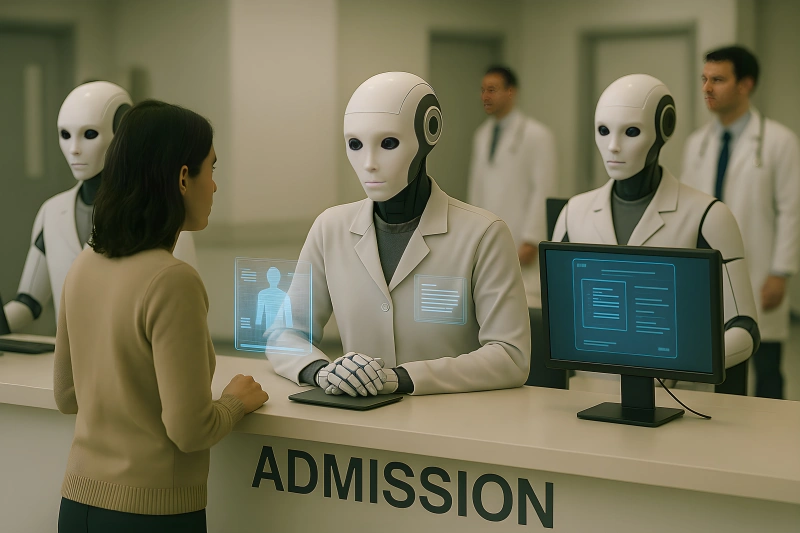
It’s not tech vs. human
While AI is making great inroads in healthcare, the complete replacement of medical professionals in medicine is still a long way off. The need for human interaction in healthcare is likely to keep AI on the sidelines as a complement, rather than a substitute, for doctors.
The Medical Futurist put forward five fundamental reasons why AI won’t replace doctors – and never will.
- Empathy – A doctor-patient relationship is built on empathy and trust; and listening and responding in a way that helps the patient feel understood. Very few people are likely to trust an algorithm with life-altering decisions. These are qualities that cannot be fully replicated by artificial intelligence.
- Physicians have a non-linear working method to arrive at a diagnosis – no algorithm or robot can have the creativity and problem solving skills required to arrive at a diagnosis.
- Complex digital technologies require competent professionals – It is more worthwhile to programme AI with those repetitive, data-based tasks, and leave the complex analysis/decision to the complex human brain.
- There will always be tasks robots and algorithms cannot perform – like the Heimlich maneuver.
- It has never been tech vs. human – the goal has always been to use tech to help humans.


Ethical and Regulatory Considerations
Regulating AI in the healthcare sector is proving to be a complex and sensitive challenge. While the benefits of software as a medical device (SaMD) are great, patients still need protection from defective diagnosis, unacceptable use of personal data and bias built into algorithms.
The growing integration of AI and ML in drug development demands proactive management of ethical and regulatory challenges to ensure safe applications.
In response, regulatory bodies like the United States Food and Drug Administration and the European Medicines Agency are actively developing AI safety parameters and promoting diverse population validation, informed by detailed regulatory guidelines for robust, ethical AI technologies.
The FDA’s AI/ML SaMD Action Plan focuses on regulating software as a medical device:
- Predetermined Change Control Plan (PCCP): Allows for modifications to AI/ML software over time, ensuring continuous monitoring and updates while maintaining safety and effectiveness. The basic idea is that as long as the AI continues to develop in the manner predicted by the manufacturer it will remain compliant. Only if it deviates from that path will it need re-authorization.
- Good Machine Learning Practices (GMLP): Guidelines to evaluate and improve machine learning algorithms for medical devices.
- Transparency: Efforts to ensure clear communication about AI-enabled devices to patients and users.
In the United Kingdom, the Regulatory Horizons Council of the UK, which provides expert advice to the UK government on technological innovation, published “The Regulation of AI as a Medical Device” in November 2022. This document considers the whole product lifecycle of AI-MDs and aims to increase the involvement of patients and the public, thereby improving the clarity of communication between regulators, manufacturers, and users.
The National Medical Products Administration (NMPA) of China, which provides regulatory oversight on medical products, published the “Technical Guideline on AI-aided Software” in June 2019. This guideline highlighted the characteristics of deep learning technology, controls for software data quality, valid algorithm generation, and methods to assess clinical risks.
Then in July 2021, the NMPA released the “Guidelines for the Classification and Definition of Artificial Intelligence-Based Software as a Medical Device”, which includes information on the classification and terminology of AI-MDs, the safety and effectiveness of AI algorithms, and whether AI-MDs provide assistance in decision making such as clinical diagnosis and the formulation of patient treatment plans.
Later, in 2022, the Centre for Medical Device Evaluation under the NMPA published the “Guidelines for Registration and Review of Artificial Intelligence-Based Medical Devices”. These guidelines provide standards for the quality management of software and cybersecurity of medical devices taking into consideration the entire product’s lifecycle.
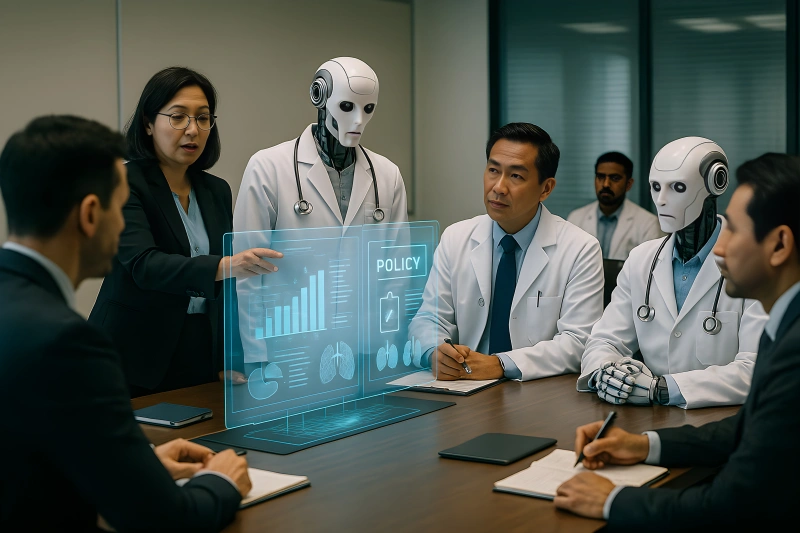
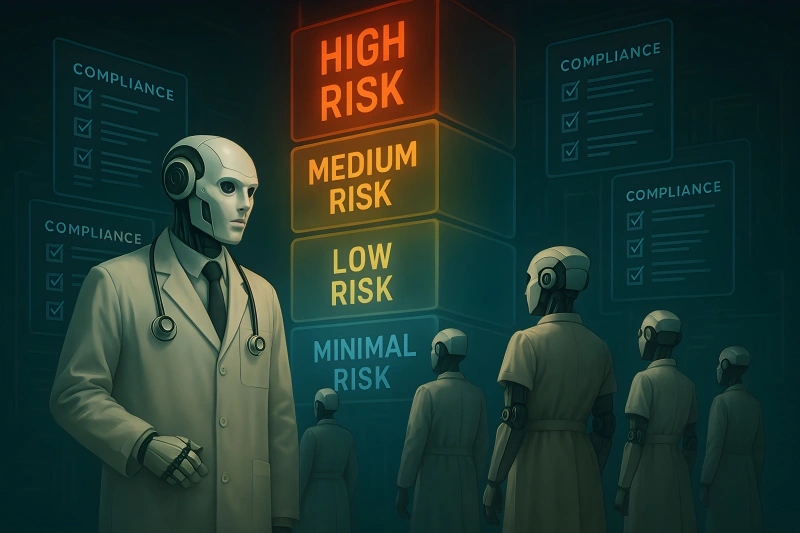
Perhaps the European Union’s AI Act has provided the most stringent standards for regulating SaMDs.
Under the Act, AI systems such as those in AI/ML-enabled medical devices, are classified as “high-risk”. This is the highest risk classification for permitted uses of AI which triggers a cascade of compliance requirements Risk management is the focal point, and is intertwined with the EU MDR risk-management system to identify, evaluate, and mitigate the ‘reasonably foreseeable risks’ that high-risk AI systems can pose to health, safety, or fundamental rights such as privacy and data protection.
The EU AI Act’s extra-territorial reach is akin to the EU General Data Protection Regulation (GDPR), transcending European borders and impacting international AI system providers and deployers. It applies to ‘providers placing on the market or putting into service AI systems or placing on the market general-purpose AI models in the Union, irrespective of whether those providers are established or who are located within the Union or in a third country’ and providers and deployers established outside the EU if ‘the output produced by the system is used in the EU.
Whether any of these regulatory frameworks will actually ensure public trust and compliance while still fostering innovation will depend very much on continuous monitoring and engagement with feedback from all stakeholders including scientists, doctors and patients.
Regulations should be robust and allow for continuous improvement to ensure it achieves its intended purpose.
References
- 7 Ways AI is transforming healthcare
- AI pinpoints stroke timing with high accuracy
- NHS in England given go-ahead for AI scans to help detect bone fractures
- AI Virtual Assistants in Healthcare: Transform Patient Care and Operational Efficiency
- Artificial Intelligence-Powered Sugar.IQ(TM) Diabetes Management App Developed by Medtronic and IBM Watson Health Now Commercially Available
- Why AI Driven Drug Funding is Revolutionizing Medicine
- An artificial intelligence based abdominal aortic aneurysm prognosis classifier to predict patient outcomes
- 5 Reasons Why Artificial Intelligence Won’t Replace Physicians
- Navigating the EU AI Act: implications for regulated digital medical products
© 2025 Suppiah & Partners. All rights reserved. The contents of this newsletter are intended for informational purposes only and do not constitute legal advice.
More Newsletter





REACH US
SUPPIAH & PARTNERS
(Formerly Law Office of Suppiah)
NAVIGATION
ARTICLES
- COPYRIGHT © 2026 SUPPIAH & PARTNERS ALL RIGHTS RESERVED
- HTML SITEMAP
- PRIVACY POLICY