
Maturing With Sophistication and Speed: Malaysia's Intellectual Property Landscape
Navigating The Friction Between Algorithms And Intuition In The Financial Sector
By Thulasy Suppiah, Managing Partner of Suppiah & Partners
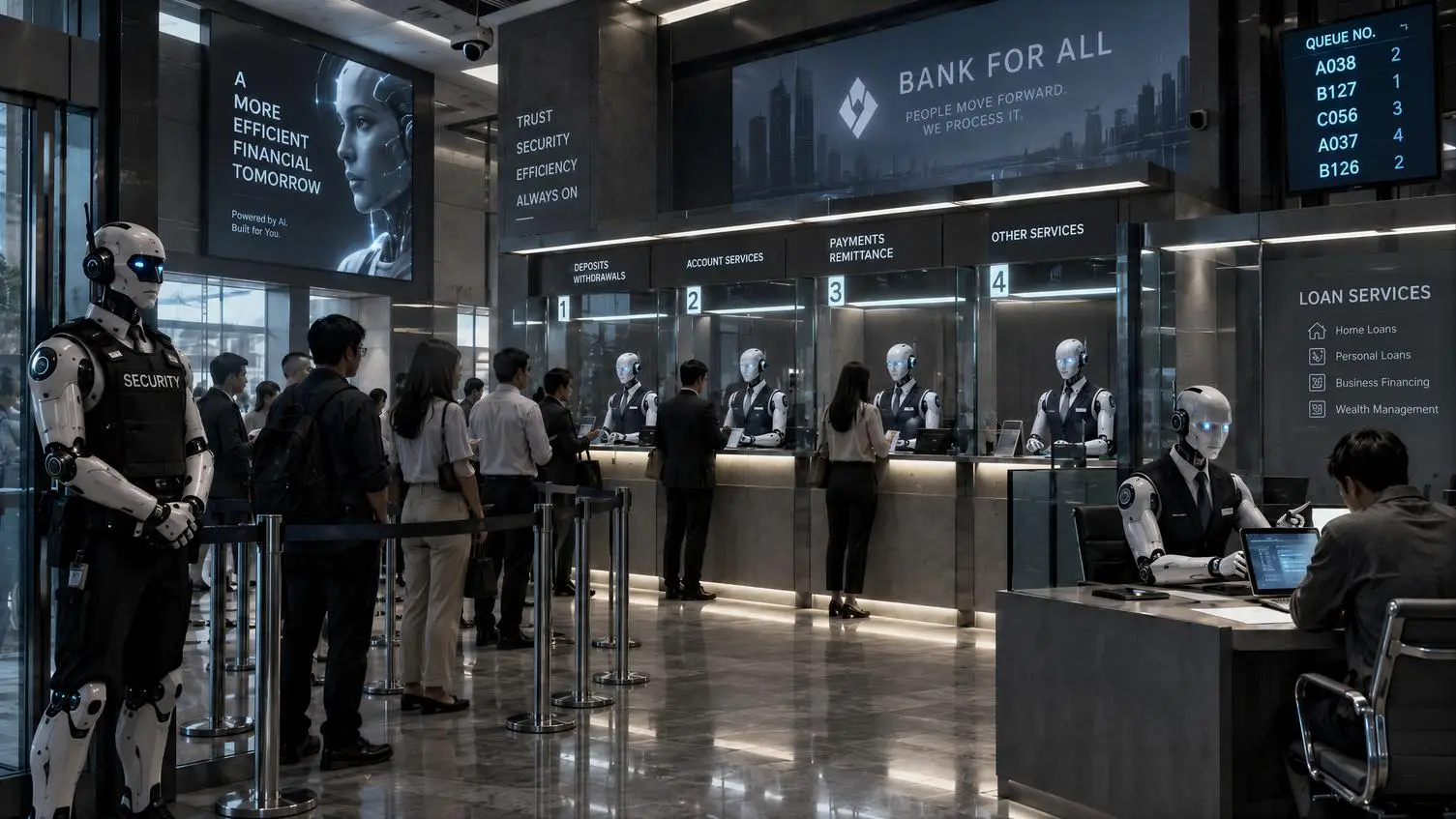
Despite significant momentum in other fields, the adoption of Generative AI (GenAI) in financial services was somewhat slow and cautious. This restraint is hardly surprising. Financial market activity is one of the most heavily regulated sectors in the global economy. In line with their fiduciary duties, financial service providers have the legal responsibility to act in the best interest of financial customers, which also means protecting them from risks of deceptive outputs, misinformation or other risks related to GenAI tools. As a result, full end-to-end automation without human oversight is still at the development phase, with financial institutions promising to keep a firm human in the loop to navigate compliance and systemic risks.
THE TENSION BETWEEN STRICT FINANCIAL REGULATION AND THE DEPLOYMENT OF GENAI
According to the Generative artificial intelligence in finance, OECD Artificial Intelligence Papers, No. 9, data privacy challenges are exacerbated in GenAI models. GenAI models learn by hoovering up massive amounts of random internet data rather than neatly sorted files, which creates big privacy and ownership problems. These models swallow everything at once and often use copyrighted books, private personal details and artwork without appropriate permission from the original creators. This means personal or IP-protected information is compromised, and there’s difficulty to distinguish if the requested information from the AI is authentic, stolen or completely made up.
Financial institutions have resolved these challenges by avoiding public models entirely. Instead, they deploy private and highly constrained architectures inside isolated enterprise clouds. These setups use zero-data-retention agreements alongside automatic redacting of Personally Identifiable Information (PII). Through Retrieval-Augmented Generation (RAG), firms ground model responses strictly in verified internal document databases. This significantly reduces hallucinations and compliance risks. Furthermore, institutions restrict GenAI to internal support tasks like text summarisation, research drafting and code development. GenAI cannot take autonomous customer actions and remains subject to strict human oversight.

With these safeguards in place, AI has been more surely adopted across the entire financial system to make operations faster, safer and more efficient. Banks and stock markets use AI to pick investments, trade shares in milliseconds, evaluate loan applications and instantly spot fraud or money laundering. Newer tools like GenAI boost these capabilities even further by writing computer code, drafting marketing content and answering customer support queries automatically.
IMPROVED SERVICES
Today, operational optimisation is one of the most widely reported use case of AI in finance. AI replaces repetitive tasks like Profit and Loss (P&L) reconciliations with fast, accurate automation. GenAI acts as an intelligent search engine to simplify internal data analysis, summarise contracts and streamline Human Resource processes. On the front end, it personalises client communication, tailors marketing campaigns and boosts customer support.
AI can assist financial service providers to interact with customers in an indirect way, by preparing portfolio allocation recommendations tailored to the customer’s profile.
However, a more direct involvement with the customer, for example allowing the model to directly recommend or even automatically execute suggested recommendations is considered too risky, as it takes away the human parameter.
PERSONALISED CUSTOMER BOTS
When AI is allowed to interact with customers directly, it is usually in the form of chat bots. The true magic of GenAI at this front line of finance is that it can create conversations so natural and contextual that the idea of a machine being involved vanishes entirely.
While primitive chatbots have bumped along since ELIZA in 1966, modern GenAI transforms these clunky scripts into hyper-personalised financial advisers. Klarna – a Swedish financial technology (fintech) company founded in Stockholm in 2005 (best known globally as a pioneer of the Buy Now, Pay Later (BNPL) payment model), stands out as a prime example of this shift. By deploying an AI assistant powered by OpenAI, Klarna handled two-thirds of its customer service chats (over 2.3 million conversations) in its first month alone. The bot managed tasks ranging from refund requests to dispute resolution, doing the work of 700 full-time agents while driving a 20 percent boost in customer satisfaction.


SUPPORT FOR FRONTLINE EMPLOYEES AND FINANCIAL ASSISTANTS
Traditional robo-advisors rely on rigid, rule-based algorithms that group clients into broad categories based on basic risk questionnaires. GenAI transforms this approach by dynamically evaluating a client’s entire financial life, including market history, personal goals, tax situations and spending habits. Then it delivers hyper-customised advice through natural, conversational interactions.
Morgan Stanley serves as a prime example of an institution executing this effectively.
In 2024, Morgan Stanley deployed AI @ Morgan Stanley Debrief – an OpenAI-powered tool which, with client consent, generates notes on the financial advisors’ behalf in client meetings and later outputs action items.
After the meeting, it summarises key points, creates an email for an advisor to edit and send at their discretion, and saves a note into Salesforce (the world’s leading cloud-based Customer Relationship Management platform, where businesses store, manage and track every interaction with their customers).
It also acts as an internal generative assistant that synthesises the bank’s entire repository of proprietary research, market insights and investment strategies. Rather than replacing human advisors, the tool acts as a co pilot, enabling advisors to instantly generate highly tailored investment strategies and personalised summaries for individual clients in seconds. This hybrid model delivers the speed and hyper- segmentation of automated advice, combined with the nuanced, conversational delivery expected from a high-touch wealth manager.
FRAUD PREVENTION
Visa has agreed to acquire fraud intelligence provider BioCatch for USD 2.4 billion (RM 9.76 billion) to strengthen its cybersecurity portfolio as AI increases the sophistication of financial scams. The purchase targets global account takeovers and fraudulent schemes that cost the world economy more than USD 1 trillion (MYR 4.07 trillion) annually.
Andrew Torre, President of Value-Added Services at Visa, highlights that AI now enables these attacks at an unprecedented scale. He notes that integrating BioCatch will allow Visa clients to detect and stop fraudulent activity well before it reaches the final point of payment.
Mastercard’s Decision Intelligence Pro solution, trained on billions of annual transactions, evaluates payment legitimacy in under 50 milliseconds. This real-time analysis boosts fraud detection rates by up to 20 per cent while sharply reducing false declines, and protects payment ecosystems without disrupting genuine transactions.
Meanwhile, HSBC plans to use GenAI in combination with agentic AI to strengthen financial crime and risk management. This dual approach involves building new architecture within the financial crime function to identify risks earlier, helping to prevent harm while also delivering a more seamless customer experience. When risks are flagged, HSBC expects response times to improve significantly, with the ability to intervene twice as quickly across the nearly one billion transactions the bank monitors for financial crime each month.
Machine learning algorithms in GenAI can continuously analyse transaction data to spot unusual spending spikes or unexpected location changes in real time.
Beyond fraud, AI streamlines customer onboarding by automating Know Your Customer (KYC) and Anti-Money Laundering (AML) checks against sanction lists. GenAI builds on this and automatically drafts Suspicious Activity Reports (SARs) and audit logs directly from internal database flags, which significantly cuts manual labour.

PROFIT CAPTURE
GenAI is helping investors work faster and make smarter bets. Instead of humans spending days reading hundreds of long company reports, news articles and financial rules, the AI scans them in seconds to find hidden bargains and create sales presentations.
Bloomberg leads this space with its own specialised AI model, BloombergGPT, and a smart assistant on its computer screens called Ask Bloomberg (ASKB). Traders can simply type questions to search global markets, run complex calculations and spot money-making opportunities instantly. As a result, investment banks close deals faster, manage client money better and squeeze far more profit out of the market.

Bloomberg’s dominant market position (where it holds around a third of the financial information of the entire global market) stems directly from a proprietary data archive built over four decades, complemented by several critical structural advantages. The firm trained BloombergGPT on FinPile, an exclusive 363-billion-token dataset of curated financial documents. This proprietary archive gives its models access to decades of US Securities and Exchange Commission (SEC) filings, financial news, press releases and research that standard models cannot reach behind paywalls. Beyond static content, Bloomberg streams live pricing, order book data and real-time market sentiment directly into its AI systems, allowing models to evaluate live market moves rather than outdated information. To overcome noisy financial inputs, thousands of internal data analysts clean, normalise and tag incoming data, boosting accuracy and drastically lowering hallucination rates.
Over 300,000 financial professionals already use the Bloomberg terminal daily.
TRADING
In trading, AI can reduce frictions and create efficiencies, increasing also the speed of trading. In electronic markets, AI-powered algorithms act like ultra-fast automated traders that buy and sell assets without human intervention. Instead of sticking to rigid rules, these algorithms learn from real-time market data to automatically adjust order sizes, execution times and trade locations, ensuring massive trades do not cause sudden price surges or market crashes. They can even predict how rival traders will move and react in milliseconds. However, because these systems learn from the same market cues, they risk accidentally aligning their behaviours and engaging in unintended market collusion.
J.P. Morgan demonstrates this through its DNA (Deep Neural Network for Algo Execution) system. This DNA uses reinforcement learning to continually scan liquidity across global currency and stock markets. It dynamically breaks up massive institutional orders and executes them in tiny fractions across the best available channels, getting clients the best possible prices without disrupting the wider market. For instance, if a pension fund needs to buy £100 million (RM 547,377,700) in foreign currency, dumping that order at once spikes the price. DNA uses reinforcement learning to slice the order into small pieces and route them quietly across different market venues. The DNA helps a single bank execute trades at the best price with minimal market disruption.

PRODUCT RECOMMENDATION
Klarna, the Swedish digital bank, lets shoppers buy items online or in-store and pay for them later in instalments. In 2024, the company launched an AI shopping assistant that works like an interactive chat. The tool gives shoppers personal product suggestions, compares different brands and highlights verified customer reviews. By providing clear expert advice directly in the app, it helps users quickly find the best products at the right price.
AI product recommendations help online stores boost sales while giving shoppers a better experience. By suggesting items tailored to each person’s taste, AI encourages customers to buy more and build bigger shopping carts. These smart suggestions save shoppers time by quickly showing them products they actually want. Happy customers are much more likely to return and buy from the same store again. Behind the scenes, the AI tracks buying patterns to help businesses stock the right amount of inventory, preventing empty shelves or wasted extra stock.
These AI-driven recommendations continuously learn and refine their suggestions, becoming more accurate over time.

CODE GENERATION
Software development is another high-impact area for GenAI in financial services, as modern banks function as much like software companies as financial institutions. GenAI acts as an intelligent coding copilot, generating new code, fixing syntax errors, running automated tests and modernising legacy infrastructure with minimal downside risk.
Goldman Sachs leads this space with its firm-wide GS AI Assistant. Deployed directly into developer workspaces, the tool acts as an in-house coding assistant for thousands of software engineers. It speeds up software creation, automates line-by-line debugging and translates old code into modern programming languages, helping the firm deliver new trading platforms and consumer tools much faster. This use case is rather underdiscussed, despite its enormous practical potential and the relatively limited downside risks.

WEALTH MANAGEMENT
Lloyds Banking Group is using GenAI to democratise wealth management across its vast customer base. Chief Data and Analytics Officer Ranil Boteju envisions bringing elite, private-banker-style financial guidance to millions of everyday account holders. By deploying AI assistants that continuously evaluate live transaction histories, cash reserves and risk tolerances, the system generates real-time, tailored nudge, such as proactive savings alerts, budget optimisations and personalised investment options directly within the mobile app. This automated approach turns complex personal finance into accessible, bite-sized recommendations, effectively closing the advice gap for everyday consumers.
Traditionally, dedicated financial planners and custom investment strategies are only available to wealthy individuals with significant assets. By using GenAI, Lloyds automates data analysis across millions of retail accounts, giving ordinary high street customers personalised budgeting, saving advice and risk profiling at no extra cost.

CONCLUSION
GenAI is transforming financial markets. Many would have us believe it is not replacing human professionals, but is only removing operational friction to enable industry participants to make smarter, faster decisions. Indeed, smart technologies are drastically cutting the time needed for administrative tasks, client preparation, and regulatory research from hours to minutes.
However, a paper from the Annals of Faculty of Economics, from University of Oradea, From Intuition to Algorithms: The Transformation of Decision-Making through Intelligent Data Technologies, shows that AI and data-driven technologies are more than supporting decision-making. The field appears to be in a phase of accelerated development, where AI, data analytics, and decision-making processes are becoming increasingly interconnected. These dynamics highlight a clear shift from decision-making based solely on intuition to a digital transformation of management practices.
When algorithms filter massive datasets, surface specific patterns, and present pre-packaged recommendations, they inevitably shape the final choice. Even with a human strictly in the loop, the algorithm subtly guides the outcome by deciding what data gets prioritised and what gets left out. In practice, the boundary between supporting a decision and driving it becomes remarkably thin.
Look out for Part 2 of this article next month where we explore deeper concerns about how algorithms accelerate the market, and whether human judgment can remain strictly at the core.
References
- FinTech Magazine. How HSBC & Google Cloud are Scaling AI Across Global Banking.
- FinTech Magazine. How Visa Enhances Fraud Prevention by Leveraging BioCatch.
- OECD (2023). Generative artificial intelligence in finance. OECD Artificial Intelligence Papers, No. 9. OECD
Publishing, Paris.National IP Law Moot Competition: IP and Sport - Fidelity Institutional. The Current State of AI in Wealth Management.
- inriver. Consumers Are Increasingly Turning to AI for Product Searches. Is Your Brand Ready?
- Klarna. Shopping Made Smarter: Klarna Adds More AI Features to Its Assistant Powered by OpenAI.
- ZenML. Enterprise Knowledge Management with LLMs: Morgan Stanley’s GPT-4 Implementation.
- Morgan Stanley. Morgan Stanley Wealth Management Announces Latest Game-Changing Addition to
Suite of GenAI Tools. - Bloomberg. AI for Finance. Built on Bloomberg.
- OECD. Artificial Intelligence, Machine Learning and Big Data in Finance.
- Financial Information Forum. JP Morgan Doubles Down on Machine Learning for FX Algorithms.
- ETCentric. Goldman Sachs Launches an AI Assistant for Its Employees.
- Financial Times. UK Banks Turn to AI for Fraud Prevention and to Improve Services.
- Șurlea, Doroteea-Andreea. From Intuition to Algorithms: The Transformation of Decision-Making
through Intelligent Data Technologies. Annals of the Faculty of Economics, University of Oradea.
© 2026 Suppiah & Partners. All rights reserved. The contents of this newsletter are intended for informational purposes only and do not constitute legal advice.
More Newsletter




REACH US
SUPPIAH & PARTNERS
(Formerly Law Office of Suppiah)
NAVIGATION
ARTICLES
- COPYRIGHT © 2026 SUPPIAH & PARTNERS ALL RIGHTS RESERVED
- HTML SITEMAP
- PRIVACY POLICY